Tuesday, May 31, 2011

Computer Guy Gets His Jollies Writing About Psychopaths

Ex-software consultant Dave Zeltserman has recently become one of the hottest commodities in the world of Boston crime fiction. I have yet to read him, but plan to soon. I have a soft spot for computer dudes with a jones for crime, having slung a line or two of code myself back in my career as one of the underworld’s wiliest debuggers. However, while I was Whitey Bulger’s PC doctor (at least for an afternoon), and smuggled the occasional CD-ROM full of SSN’s and Credit Card numbers out to assorted other miscreants, Mr. Zeltserman did high-class honest labor for the likes of Digital and Lucent. He struggled for years to get his crime fiction recognized by the dickheads in Big Publishing, but they tended to reject his work because it was – ahem – “too dark”. Accusing crime fiction of being “too dark” is like bawling out a T-bone steak because it has too much meat in it. Anyhow, Zeltserman is a hotshot now, an increasingly well-known go-to man for those who like their psychopaths straight-up. This is not to say he doesn’t draw from his own experience as a working stiff. One of his latest novels is Outsourced, the tale of a couple of downsized IT guys who get themselves in deep shit planning a bank heist. I can’t think of any subject trendier than that, can you?

Anyways, here's a gaggle of links about the dude to whet your interest in his work.

Boston Globe article about crime fiction
The Amazing Zeltser-Man (Bleeker Books)
Dave Zeltserman's page at CrimeSpace
Dave Zeltserman's website
"The Myth of Publishing" by Dave Zeltserman

Friday, May 27, 2011

Saugus Goodfella Becomes Idaho Cowboy

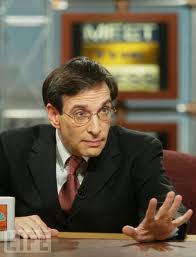
A Mafia hitman named Enrico Ponzo – seen on the left in the photo above - was recently discovered living as a rancher in Idaho. Don't get too excited though. The place was hardly any Southfork. He had exactly 12 acres and 12 cows. To give you an idea of how much land that is, consider that 12 acres is less than 2 percent of a square mile. This is the kind of micro-ranch that my wife’s cousin has in Texas, where he raises a tiny herd of bulls for the rodeo market. I helped feed the hulking little devils one drunken Christmas evening. Hemmed in by a maze of rickety fencing and pickup trucks the size of cabin cruisers, I offered to them what appeared to be giant gerbil pellets. Each of them could have gored me to death with a toss of his head, I surmised. Having a hitman as a neighbor is similar, I would imagine. One moment they may be as cuddly as all get-out, and then their mood turns…

The 42-year old Ponzo had been indicted in 1997, along with 14 other men, of numerous federal charges. These included racketeering, conspiracy, murder and attempted murder. During a gang war in 1989, Ponzo and his pals had murdered three other hoods and tried to whack at least seven more. He was allegedly one of a group of masked gunmen who had assaulted “Cadillac Frank” Salemme, the head of the Patriarca family of the New England Cosa Nostra, at a Saugus IHOP. By 1994, however, Ponzo had skipped town to escape drug charges, and nobody had seen his butt since.

It must have been hard to top such an impressively active youth, but Enrico tried. He fulfilled the American Dream of owning a ranch in The West. He became a well-liked resident of Marsing, Idaho, calling himself Jeffrey John Shaw (“Jay” for short) and traipsing around in “bib overalls and a straw hat”. This idyll, which sounds like an episode of Crime Story morphing into Green Acres, came to an end this spring – and very possibly for reasons of sentiment. It turns out he was engaged in a custody battle for the children he'd had with his estranged girlfriend. As the battle heated up, he began to take risks by asserting his false identity in court documents and whatnot, and that may have drawn the notice of the Feds. This is one lesson that any Anti-Hero of Classic Noir could have taught him. Never Get Emotionally Involved – especially when you're on the lam.

His newfound friends said he was a great guy, always ready to fix your computer or to get jiggy in front of a Wii screen. The quality of his friends makes you wonder though. After he was arrested, several of those same buddies were themselves arrested for "using a jackhammer to break through the foundation of Mr. Ponzo’s house, then using a blowtorch to open a steel safe beneath the floor and stealing more than $100,000 in cash, as well as gold and other valuables."

Enrico Ponzo (Boston Globe)
Fugitive wanted for attempted Saugus mob murder arrested in Idaho (Wicked Local News)
Enrico Ponzo Captured (Huffington Post)
While the mystery of who Enrico Ponzo is has been solved, other questions remain (Idaho Statesman)
An Ardent Friend Forever; Then Came the Theft Charges (New York Times)
Idaho Rancher Revealed as Gangster From Boston (New York Times)

Wednesday, May 25, 2011

Does The Cosa Nostra Have Fans In The North Of Ireland?

Pictured is an eatery-slash-nightclub in Ballyshannon, Donegal called "Sopranos". Although they do have bands (and therefore singers) that perform here now and then, the "Sopranos" in the name of the joint does not refer to anything musical. At some point in its recent history, the owners of the joint decorated it on the theme of The Sopranos of HBO fame - Tony, Paulie, Christophuh and the whole gang. And we do mean gang. My gun moll and I stopped here for some chow about four years ago on a trip to Ireland in search of Whitey. We ended up ordering a vegetarian pizza which - unfortunately - consisted of canned corn and carrots dumped on a pizza pie. Sort of reminded me of a similar meal the humorist David Sedaris once, ahem, "enjoyed" in France. We ate it though. We were hungry. We devoured our repast next to the entrance to the joint and, since it was summertime, the door had been left open in that homely tradition known as "Irish air-conditioning". Flies pestered us like little Beelzebubs reincarnated from dead mafiosi. TV shows popular in America are popular worldwide, so that is the main explanation why we managed to find a pizza joint called "Sopranos" in Ireland. But then again, we were very close to the border with Northern Ireland, and perhaps this fondness for a fictional Cosa Nostra family expresses a displaced nostalgia for the devilish excitement once generated by the IRA. In Boston at least, the IRA and the Cosa Nostra probably had actual connections. We know Whitey Bulger rubbed shoulders and knocked knees with the wise guys, and you can't tell me he didn't run a gun or two for the IRA. Whitey all by himself could inhabit a single "degree of separation" between the Irish Republicans and The Mob.

Monday, May 23, 2011

The Friends Of Eddie Coyle

The Friends of Eddie Coyle is not only one of the best crime novels about Boston – and arguably the best thing George V. Higgins ever wrote – but also one of the best crime movies about Boston as well. Granted, there is something dull about the pacing and the cinematography of the movie, but that only makes it more faithful to its subject. It seems to take place in Boston during one of our more colorless and dismal months, such as March or November. It also takes place in the 1970’s - the very nadir of Boston’s economic decline before it rebounded as a hi-tech and financial powerhouse in the eighties. This ambience of rundown drabness reflects the state of the protagonist, too. Eddie Coyle, played by Robert Mitchum, is an aging third-rate mobster who has to inform on his cronies to keep out of jail. He hands a gunrunner over to Richard Jordan’s undercover cop, and then finks on a stewardess-bonking bank robber played by Alex Rocco. When the mob kingpin-cum-bartender he works for gets wind of his efforts, he treats poor tired old Eddie to a Bruins game and a night on the town and then shoots him in the head as he begins sleep off the booze on the way home. Ironically, the kingpin – played by Peter Boyle with sinister restraint - was himself an informant, and to the same cop at that. Nobody can trust anybody in this story, to an almost comical degree. This is a trope that unifies this piece of classic crime fiction with the so-called “paranoid style” of the 1970’s. (Tellingly, Higgins later wrote an ill-received screed called The Friends of Richard Nixon.) At the same time its baroque theme of betrayal makes The Friends of Eddie Coyle a precursor of later movies like Reservoir Dogs that are themselves postmodern parodies of the old double-cross.

The original novel was the first one George V. Higgins published, after 17 failed attempts, and he went on to write more than twenty others before he died in 1999 at the age of fifty-nine. He also had a busy career as a U.S. Attorney. His books are unique in that they are written almost entirely in dialogue, usually profane and often very lengthy, the same guy talking on for pages. The movie script for Eddie Coyle was nearly catatonic in comparison. He presents an interesting contrast with Robert B. Parker. They were both born in the 1930’s, started publishing around the same time and cranked out reams of stuff about their chosen territories. Yet Parker remains an icon of detective fiction while Higgins is scarcely remembered.

For an interesting tidbit about the movie, consider that the bank robber Jimmy Scalise was played by Alex Rocco. Rocco was a native of Cambridge, Mass. who grew up in Somerville and hung out with Whitey Bulger’s Winter Hill gang in his youth. According to Wikipedia, he was involved in an incident that set off “the Boston Irish Gang War of the 1960’s”. Young Rocco had the good sense to leave Boston for California, change his name (from Petricone) and become an actor. All of us miscreants should make such lucky choices in our own lives.

George V. Higgins (Wikipedia)
The Friends of Eddie Coyle (Wikipedia)
Alex Rocco (Wikipedia)
The Friends of Eddie Coyle (Amazon.com)
Obituary - George V. Higgins (The Independent)

Thursday, May 19, 2011

The Semiotics Of "Juvenile Delinquent" Vs. "Youthful Offender"

I began my quasi-bogus career as a "juvenile delinquent" at the age of eight when I shoplifted five sticks of red licorice from the local five-and-dime. Later I expanded my imaginary rap sheet when, as an angry fifteen year old, I stalked into the playground behind my old grammar school after supper and broke half a dozen windows. Or more. Maybe a lot more, I don't quite recall. It was after dark, it was winter, the grammar school had been closed for good anyway (it would later be gutted and turned into condos), and there were huge chunks of ice and frozen snow lying around. My vandalism was both convenient and redundant. No one cared about some kid busting up a joint that was gonna be demolished anyway. Still, vandalism is vandalism, and this adventure made the little devil in me very proud. I could now apply to myself that grandiose term "juvenile delinquent". This was a bit of bureaucratese that someone dreamed up in the late forties or thereabouts to make bad kids sound like some kind of official social problem. For all its fancy-ass syllables, "juvenile delinquent" became an iconic phrase, spreading meme-like through the movies and the press in the fifties, sixties, seventies and beyond, gathering images and acolytes as it rolled like a big black tarball down the hills and valleys of the American soul. James Dean. Elvis Presley. Marlon Brando. Vinnie Barbarino. Michael Madsen and Mickey Rourke, even. The Blackboard Jungle. Rebel Without A Cause. The Outsiders. Jailhouse Rock. Switchblades and bicycle chains. Guys with ducktails in leather jackets with upturned collars, smoking, sneering, raising hell. Somehow this pompous euphemism that was meant to elevate the seriousness of teenaged crime merely gave it a legendary gloss. And then, eventually, although I don't remember exactly when it happened - probably during the PC late eighties-early nineties - a new euphemism appeared.

The latest legal moniker for bad kids is "youthful offender". It isn't very Latinate and it doesn't have the musty bureaucratic quality of the older term. It doesn't evoke police stations with file cabinets against the walls and typewriters on the desks, judges sentencing you to the "reformatory", and grimly hysterical mothers in flounced dresses weeping themselves silly. The "youthful" part of it makes the term sound almost hopeful, as if the "offender" deserves to be treated lightly and given another chance. As such, it conjures up, if not police precincts and the courts, the Politically Correct dictatorship of a college campus, in which everything that is said, about anyone, must be neutral and respectful and only blandly descriptive. "Youthful offender" is actually an even purer, fakier euphemism - surely one that can never face up to the reality of fourteen year old sociopaths with souls as old as evil itself. The only good thing about it is that it sounds so lightweight and stupid that no self-respecting "bad kid" would want to claim the title. It almost sounds like something your mother would say. That is, if she were some middle class Pollyanna who smelled nice and belonged to a book club. Nowadays, about the only time you hear even a faint echo of the older term is when Chris Meloni refers to "juvie" in Law And Order: Special Victims - and I'll bet there are more than a few kids who, with puzzled looks on their faces, ask their parents WTF that means.

Juvenile delinquency (Wikipedia)
Juvenile delinquent (Definition)
Youthful offenders (Definition)

Wednesday, May 18, 2011

Muggers Are Bullies All Grown Up

I have been mugged at least twice in my life, and that's enough. Knock on wood. Never thought of becoming a mugger myself though, mainly because it's one of the most puerile crimes imaginable. For one thing, it's a stupid and impatient young man's game, wherein brute force wins out over subtlety and skill. At the same time, it seems like a survival into young adulthood of that vile species known as the Schoolyard Bully. I remember once when I was a kid - a real kid, I mean, a little dude about ten or eleven. I was coming up from the five-and-dime one dreary Saturday afternoon in March 19__, walking up by the playground fence of the school I went to. Two slightly older kids cornered me against the rock wall at the base of the fence. I can't for the life of me remember what the little fuckers said, only that they were hassling me, harassing me for harassment's sake alone. Hey, kid, where ya live? Ya live in ahh neighborhood? Dis is ahh neighborhood, kid. And like that. Total furrow-browed inanity with no purpose in mind. I didn't know them, and they didn't know me - which is never the case with actual bullies, as bullies are among the most intimate enemies you'll ever have, the ones you see every freakin' day... They weren't quite muggers yet either, since they were too obtuse to even ask me for money. There were ornery little in-betweens caught in their evolution from Bully to Mugger the same way that some fuzzy cocoon in a tree crotch is halfway between bein' a caterpillar and bein' a butterfly. When I ran into my first actual mugger, I was comin' home drunk down Mass. Ave. in North Cambridge, and this pudgy dude - a veritable poster boy for The Non-Athletic, in fact - confronts me. More of that silly territorial palaver about "Dis is my neighborhood...Duh..." Despite my inebriation, I catch his drift, smile at him and say, with as much insulting disbelief as I can muster, "You're... you're trying to...to mug me, aren't you?" If the guy were a dog, his ears would have been drooping just then. "Yeah..." he says. "Oh, that's touching," I mutter. "You got any change on ya?" "Well," I reach into my pocket at a leisurely pace, dredge up some coins, and tell him, "About 47 cents." "I'll take it," he says. I hand it over, more grinning than trembling. He grunts again, "Dis is Nawrth Cambritch... You watch your ass aroun' here, you got that?" I nod, and he stuffs his tiny prize into the front pocket of his overstuffed Levi's, then turns and flabbily waddles away. Funny. He didn't seem like a natural bully, and - having survived junior high and senior high - I knew bullies. He wasn't big enough to scare a guy by bigness alone, nor small enough to have the Napoleonic nastiness of those pint-sized contenders, and he sure wasn't one of those proto-alpha male bullies that the mean girls always like. He seemed more like a ex-victim of bullies than a bully. Sort of reminded me that even Mike Tyson, who first earned his street-fighting chops as a mugger, had a high voice and a lisp. Maybe, for some, becoming a mugger means having a second chance to be a bully more than anything else.

Friday, May 13, 2011

Dr. James A. Fox - Our Local "Dean Of Death"

Here are some links pertaining to James Alan Fox, a Northeastern University criminology professor who has been nicknamed “The Dean of Death”. Since I first returned to Greater Boston fifteen years ago from my cigarette-smuggling operation in North Carolina (only kidding – my real crimes were something else), I have seen this dude every once in a while on the tube. A little pat sometimes, in the way of those profilers who continue to insist that sociopaths can never, ever feel true emotion (sob…), but otherwise thoughtful and informative. In fact, watching him makes me wish I had studied criminology myself back in college. It almost makes me wish I’d gone to Northeastern, like this big honking dude I used to work with in a clothes store near South Station who was going to N.U. to become a cop. (I always thought he was dumb though.) As for moi, I am pleased to say that I was an A student in anthropology and psychology and the field of criminology is just a stone’s throw away from those. I suppose I can always pretend to be a criminologist, the way Kenny Bianchi pretended to be a clinical psychologist, but somehow I think that would not be fully satisfying. In any case, Dr. Fox is the prominent go-to man for analyzing the mindset of just about anyone who generates mayhem in these parts. In fact, he keeps a regular “Crime and Punishment” blog at the Boston Globe website that may be worth following.

James Alan Fox (Wikipedia)
Dr. Fox's "Crime and Punishment" blog (Boston.com)
Dr. Fox's books (Amazon.com)